Summer Tumbler 20oz Skinny, Watermelon
When I first opened the Summer Tumbler 20oz Skinny, Watermelon file, I immediately felt that summer craft fair buzz. The watermelon graphic isn’t just a seasonal clipart; it has a playful, hand-drawn personality that makes you think of poolside afternoons, picnic blankets, and custom gift shop charm. But as an embroidery designer, I’m not just looking at a pretty picture. I’m asking: Can this translate into stitch, hold up on a finished product, and actually make a customer smile? This is a Print Templates graphic, not an embroidery file, so the real work starts with understanding what you’re getting and how to turn it into a stitch-ready asset.
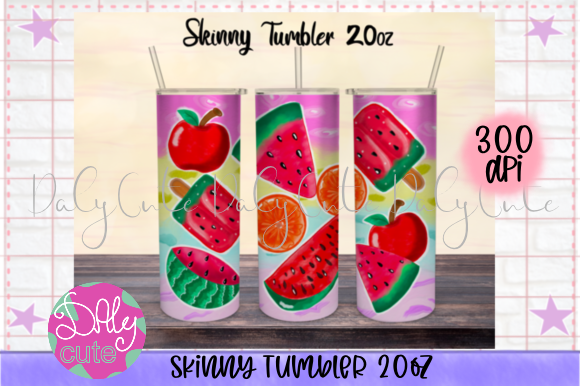
Inside the zip, you’ll find two high-resolution PNG files at 300 dpi — one straight and one tapered. That’s a thoughtful touch for a Graphics asset, because it gives you shape flexibility right from the start. The straight version suits flat, rectangular products, while the tapered silhouette mimics the true skinny tumbler curve. As a digitizer, that dual offering helps me visualize the design on different mockups and decide which version will stitch out cleaner on a tote bag, a sweatshirt, or a kitchen towel. But let’s be clear: these are PNGs, not SVG or embroidery files. You’ll need to resize, trace, and digitize them yourself, or hire a professional digitizer, before any needle hits the fabric.
First Impressions of a Summer Graphic
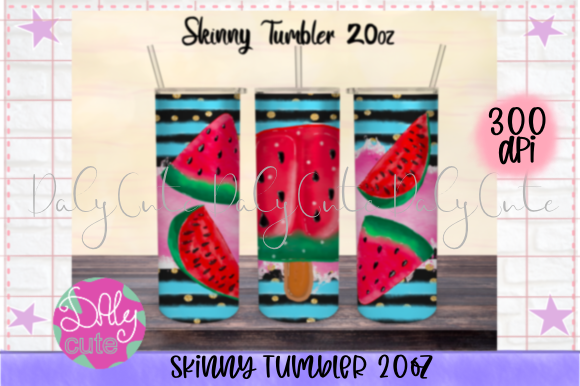
The watermelon tumbler motif is instantly recognizable. Bold red fruit flesh, contrasting green rind, and playful seed dots create a design that feels both nostalgic and trendy. The composition is clean enough to work as a standalone appliqué patch, yet detailed enough to inspire a multi-color satin stitch project. The tapered version especially reminds me of those cute slim tumblers you see at boutique shops, which immediately plants a product idea in my mind: a matching embroidered tumbler sleeve or a coordinating market tote. The mood is light, joyful, and effortlessly marketable.
However, because it’s a raster image, the edges aren’t vector-crisp. That’s fine for print mockups, but for embroidery, you’ll need to trace carefully. The high 300 dpi resolution helps; you can zoom in to capture the seed shapes and the subtle curve of the watermelon stripes without too much pixelation. Still, I’d recommend using it as a reference layer in your digitizing software, not as a one-click auto-digitize source. Manual control will preserve the charm.
From Screen to Stitch: The Real Embroidery Potential
Let’s imagine a real-life scenario. I’m preparing a limited-edition summer collection for my Etsy shop: custom embroidered canvas tote bags, lightweight linen aprons, and cute baby rompers. I want a cohesive theme that screams sunshine. The Summer Tumbler 20oz Skinny, Watermelon graphic becomes my visual anchor. I can digitize the straight version for a flat tote panel, turning the tumbler body into a satin stitch masterpiece with a fill stitch watermelon interior. The tapered version could wrap around a cap’s side panel or a shirt pocket, giving a curved, dimensional look.
Right away, I notice the design’s personality fits machine embroidery design projects that need a handcrafted, boutique feel. It’s not overly complex, which is a plus. Too many tiny details can turn into a muddy mess on fabric. The watermelon seeds are distinct enough to be single running stitches, and the rind stripes can be simple alternating color blocks. This design will read well from a distance, which is crucial for items like tote bags or sweatshirts that people see across a room.
The Tumbler Shape and Embroidery Adaptation
One thing I appreciate is that the tumbler isn’t a generic cylinder. The skinny 20oz shape has a slight taper, and the product includes both versions. For embroidery, the tapered file is a godsend if you’re working on curved surfaces like caps or garment side seams. You can digitize it with a slight arc to match the product contour, and it won’t look distorted. I’ve seen too many rectangular designs turn into a warped mess on a curved hat. Here, the taper naturally compensates. I’d still advise testing the stitch-out on a similar curve before committing to a full production run.
Since we’re talking about digitizing, the stitch density will be your call. The watermelon flesh can be a smooth fill with a tight satin border, while the seeds might be a simple column stitch. The tumbler outline can be a running stitch that defines the shape without adding bulk. Keep in mind: this is a PNG, so you’ll need to decide on thread colors yourself. I’d match a vibrant watermelon red, a leafy green, and a dark brown or black for seeds. A touch of pale pink for a highlight can add dimension, but don’t overcomplicate it. The design’s strength is its cheerful simplicity.
Ideal Projects for the Watermelon Tumbler
After analyzing the graphic, I can easily see it on a dozen products. A tote bag design is the most obvious match — picture a natural canvas tote with this tumbler embroidered large on the front, maybe with a witty summer phrase underneath. For kitchen towel projects, the straight version would look adorable stitched in the corner, paired with a contrasting border. Baby embroidery applications are also promising; a tiny watermelon tumbler on a onesie or bib adds a gender-neutral, playful touch that parents love.
I could use this for custom apparel like a lightweight sweatshirt or a linen shirt. The design isn’t too dense, so it won’t make the fabric stiff — a huge plus for wearables. For patches, you could digitize it with a merrowed edge and sell them as iron-on or sew-on patches at craft fairs. The watermelon tumbler is distinctly summer, so it’s a perfect seasonal product for holiday embroidery around Memorial Day, Fourth of July, or just a general summer collection. I’d even consider it for a pillow cover in a beach house or a blanket corner for a picnic set.
Where You Should Use It Carefully
Not every embroidery project is a good fit. Because the design has some curved elements and distinct color blocks, I’d avoid small hoop sizes that force the detail to shrink below 2 inches. The seeds and rind stripes might become indistinguishable blobs. Stretchy fabric like thin jersey can distort the tumbler outline unless you use a heavy stabilizer and possibly a knockdown stitch. Textured fabrics like terry cloth or fleece can swallow the finer seed details, so test first. Dark fabric might require a white underlay to make the red pop, but that adds a step. And layered garments with seams running through the design area can disrupt the tumbler’s vertical flow. Always hoop carefully and digitize with seam allowances in mind.
Practical Considerations for Embroidery Success
As a reviewer who’s been burned by assuming a design is stitch-ready, I’ll say this: the Summer Tumbler 20oz Skinny, Watermelon is a fantastic starting point, but it demands a digitizer’s eye. You’ll need to confirm your hoop size fits the design’s final dimensions after resizing. The PNGs are high resolution, so you can scale them up or down without losing too much quality, but remember that scaling down too much will lose the fine seed details. Always test the design on scrap fabric first — I can’t stress this enough. A quick stitch-out on a similar fabric weight will reveal any density issues, color mismatches, or alignment problems.
Check thread color contrast against your fabric. A red watermelon on a red tote bag will disappear, so consider using a light background or adding a contrasting outline. I like to test the digitized design in black and white to see if the values hold up. Also, compare how it looks on light versus dark fabric backgrounds. The watermelon rind green might need a lighter shade on dark fabrics to avoid blending in. Use a proper stabilizer — cutaway for knits, tear-away for woven, and possibly a water-soluble topper for textured fabrics. These small steps make the difference between a professional finished product and a crafting fail.
From PNG to Product: A Designer’s Workflow
My typical workflow with a printable mockup like this starts with importing the PNG into my digitizing software. I’ll trace the major shapes manually, creating closed objects for the tumbler body, the watermelon flesh, the rind, and the seeds. I assign stitch types: a tatami fill for the red area, a satin stitch for the rind, and a simple running stitch for seeds. I’ll add an underlay to prevent the red from showing through light fabric. Then I’ll test-sew on a piece of cotton drill that mimics tote bag material. I’ll adjust the stitch angles so the fill doesn’t all run in one direction, which can cause pulling. After testing, I’ll save the embroidery file in the format my machine needs, and then I’m ready to stitch on the final product.
But what if you’re not a digitizer? You can still use this graphic to create digital product previews for your Etsy listings. Place the PNG on a mockup of a tote bag, a sweatshirt, or a hat, and show customers what the finished embroidery will look like. Just be transparent that it’s a digital mockup, not a photo of a stitched item. That alone can boost buyer engagement, because customers respond to strong visual presentation. The high resolution makes the mockup look crisp and professional, which builds trust.
Customer Appeal and Market Fit
From a small business owner’s perspective, the watermelon tumbler theme is a proven seller. It taps into the summer aesthetic, picnic culture, and the ever-popular “fruit fashion” trend. I’ve seen similar designs on personalized gift items like monogrammed towels with a watermelon accent, or on boutique branding merchandise for a local smoothie shop. The tumbler shape itself is trendy; people love their skinny tumblers, so a matching embroidered product feels intentional and cohesive. As a craft business asset, this graphic can be used for multiple product lines — from apparel to home decor — giving you a cohesive summer collection without needing a dozen different designs.
The design’s giftability is high. A hostess gift of embroidered kitchen towels with this watermelon tumbler, paired with an actual 20oz tumbler, would be a hit at any summer barbecue. The recognition factor is immediate: everyone knows what a watermelon is, and the tumbler adds a modern twist. For Etsy sellers, this kind of design often performs well in search results because it’s specific, seasonal, and visually searchable. Incorporate it into your listings with tags like “summer embroidery,” “watermelon tumbler,” and “handmade tote,” and you’ll attract the right audience.
Licensing and Commercial Use
Since the product description only mentions PNG files and resizing, it’s crucial to clarify the licensing before you sell finished items. The Print Templates category often implies that the graphic can be used for physical product creation, but you must confirm. Don’t assume you can embroider it on a hundred totes and sell them without checking. Some graphics are for personal use only, or require an extended commercial license. Reach out to the designer or check the listing details. The same applies if you plan to resell the digitized embroidery file — you’ll need explicit permission. A responsible small business owner always verifies commercial embroidery rights before adding a design to their product lineup.
Final Thoughts
As an embroidery reviewer, I’m not dazzled by a pretty thumbnail. I’m looking for whether a design will hold up under the needle, make a customer’s eyes light up, and earn its keep in a small shop. The Summer Tumbler 20oz Skinny, Watermelon passes that test, but with the understanding that it’s a graphic asset, not a stitch file. The dual PNG format, high resolution, and charming composition give you a flexible foundation for a range of summer-themed embroidery projects. The tapered version is a standout feature for curved surfaces, and the straightforward watermelon theme reduces the risk of a digitizing disaster.
My advice: treat this as a creative springboard. Use it for mockups, test digitized versions on scrap fabric, and pair it with products that benefit from its cheerful, seasonal vibe. Pay attention to fabric choice, stabilizer, and hoop size, and always check the small details — especially those seed placements — before you stitch a final piece. If you’re a craft business owner, this design can anchor a cohesive summer collection that feels both timeless and on-trend. The watermelon tumbler isn’t just a graphic; it’s a mood, and that mood sells. Just make sure you put in the embroidery work, because the best designs are the ones that stitch out as good as they look on screen.